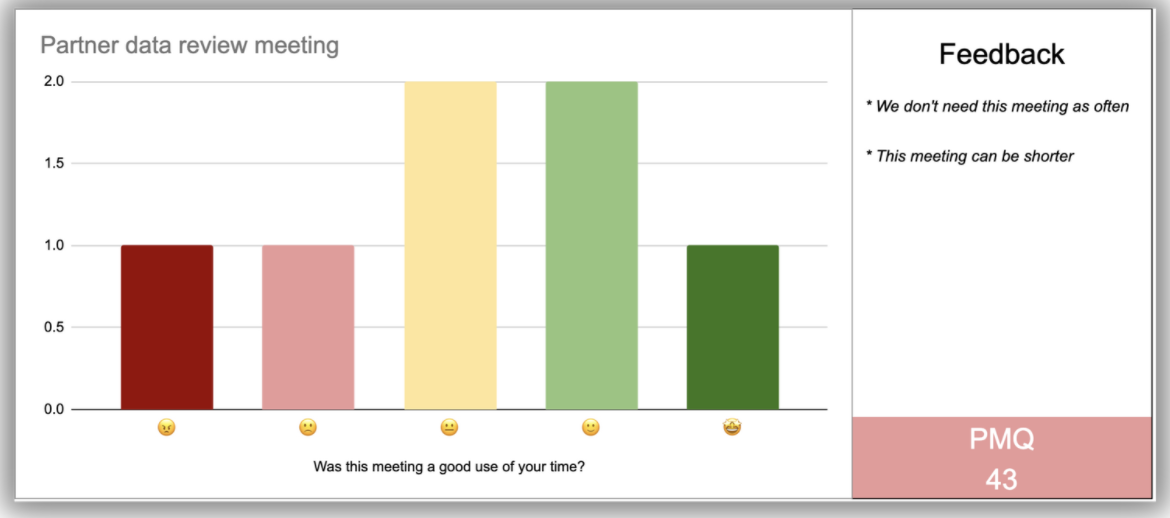
Receive a meeting score to make sure it is a productive use of time.
Start with a recurring group meeting.
We received your message and will contact you back soon.
Error sending please try again
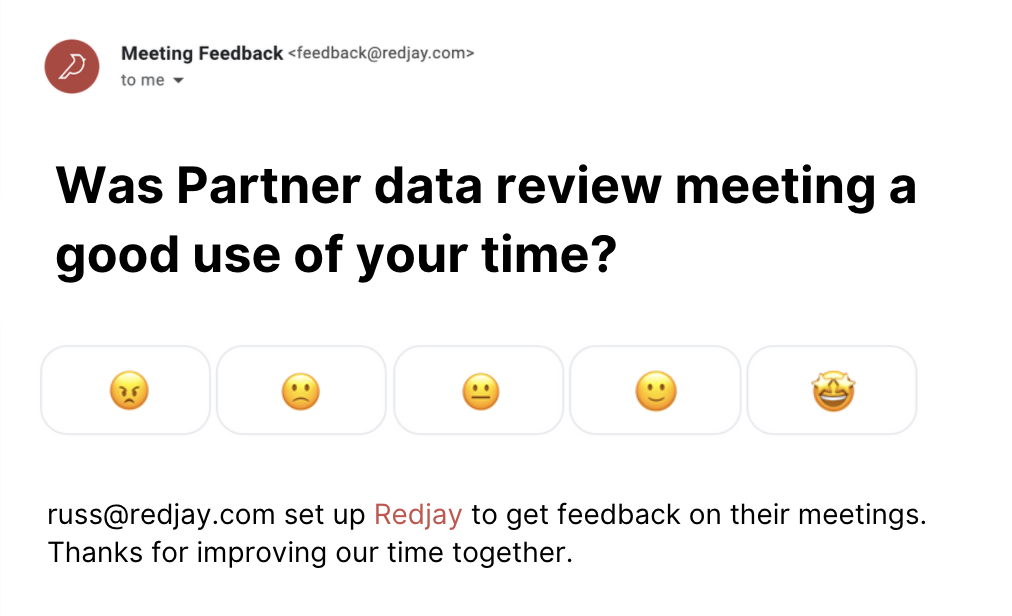
Not only will collecting feedback inform how you plan and lead future meetings, you’ll also communicate to employees that you want meetings to be a more positive experience for them.
- Steven Rogelberg (Adam Grant has called Rogelberg the “world's leading expert on how to fix meetings.”)
Redjay collects, analyzes, and shares feedback with the meeting attendees. This allows everyone to learn which meetings are great or need to be improved.
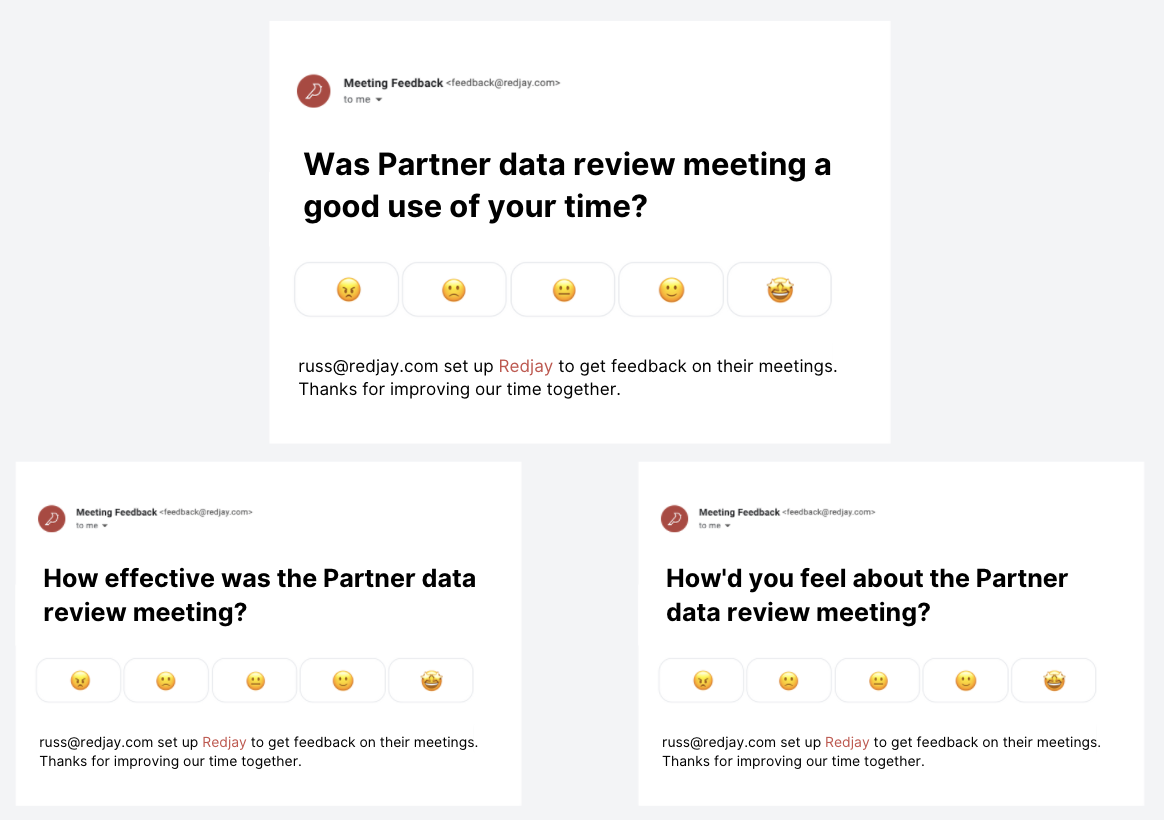
While meetings may differ in topic, length, frequency, and a whole lot of other things – every great one has these three traits in common. They are efficient, effective, and inclusive. Our questions determine how people in the meeting feel about each trait.
if you can't measure it, you can't improve it
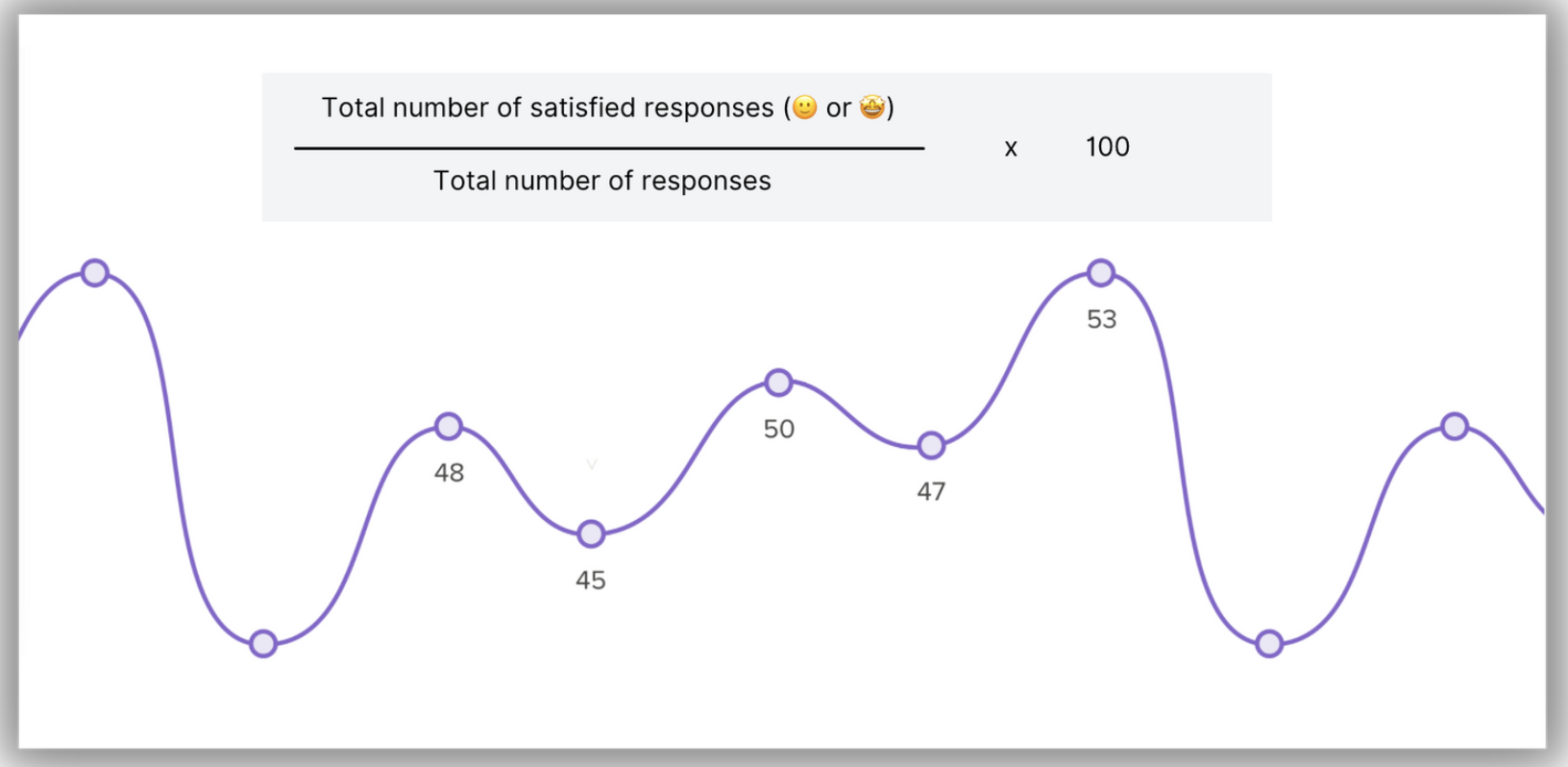
Perceived Meeting Quality (PMQ) is a way to measure an attendee’s feelings about a meeting. This term comes from the following 2011 study by Cohen, Melissa A.; Rogelberg, Steven G.; Allen, Joseph A.; and Luong, Alexandra, “Meeting Design Characteristics and Attendee Perceptions of Staff/Team Meeting Quality"
We adapted the study's 18 questions into three measuring the efficiency, effectiveness, and inclusivity of meetings. These three questions combine into a PMQ score which is similar to a customer satisfaction score (CSAT). Now you have a metric to track your progress as a company.
The best news of all: for those organizations that can make the leap from painful meetings to productive ones, the rewards are enormous. Higher morale, faster and better decisions, and inevitably, greater results.
- Patrick Lencioni (The author of "The Five Dysfunctions of a Team” and "Death by Meeting")
We received your message and will contact you back soon.
Error sending please try again

We received your message and will contact you back soon.
Error sending please try again